Malaysian Durian: What Every Visitor Gets Wrong
Your guide to malaysia durian in Malaysia.
Pauline
Simply Enak
> What you need to know about Malaysian durian: Durian season runs from June to September, with varieties like Musang King, D24, and D13 each bringing something different to the table. Here is how to pick a good one, what each variety tastes like, and where to find them in KL and Penang.
Why Durian Is More Than Just a Fruit
Malaysia is one of the few places where durian is genuinely part of everyday food culture, not a novelty. Families plan trips around durian season. Vendors in Balik Pulau and Pahang set up stalls that draw queues of locals who know exactly which tree their fruit came from. The variety names — Musang King, D24, Golden Phoenix — aren't marketing labels. They signal distinct flavours that locals recognise immediately and choose deliberately.
The challenge for visitors is that the best durian experience requires knowing two things most guides skip: which varieties actually suit a first-timer, and how to judge ripeness before you buy.
The Varieties That Matter
Most Malaysian durian vendors carry between five and ten varieties at any given time. For a visitor, the differences between them are significant enough to change the experience entirely:
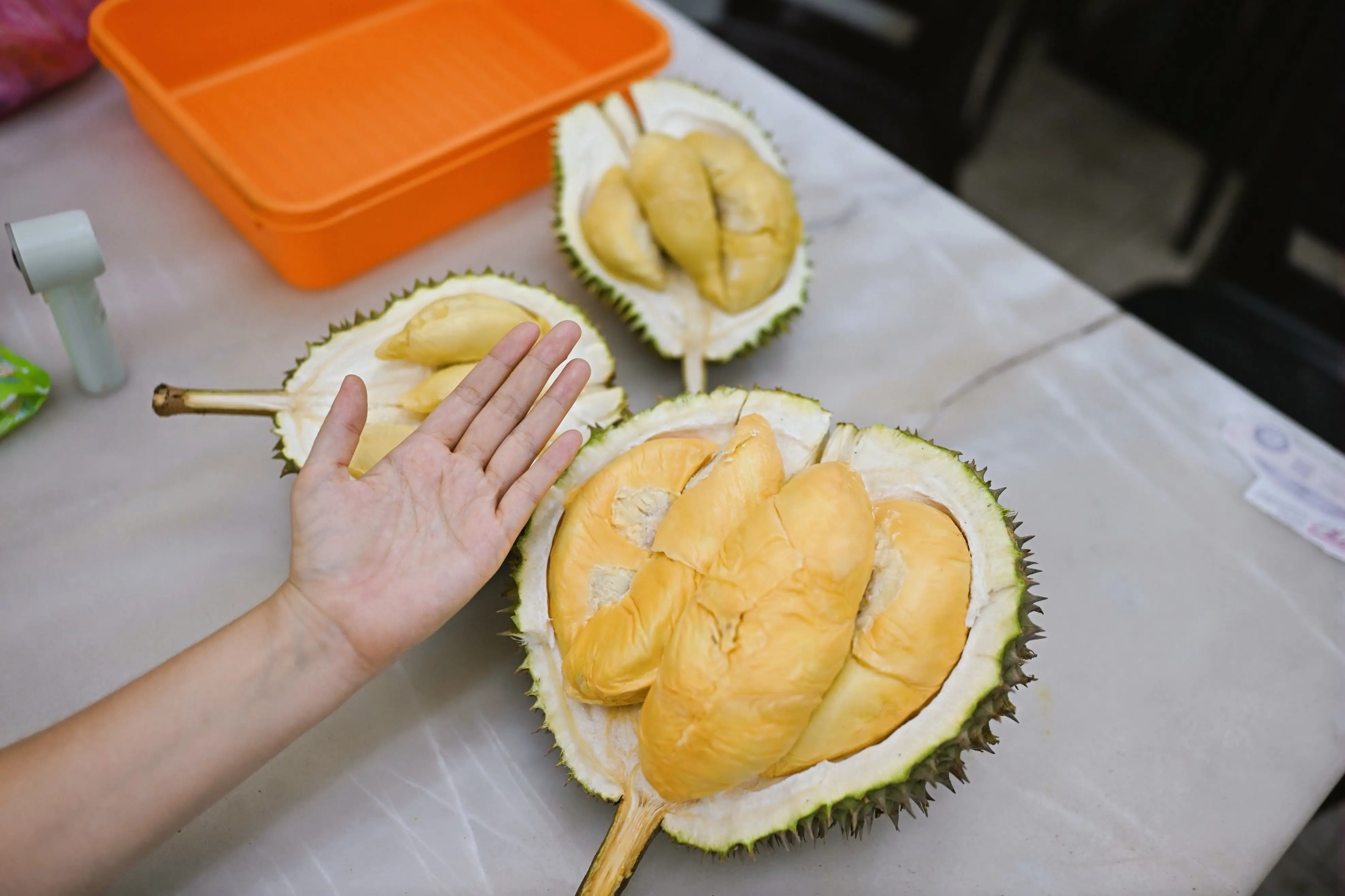
Musang King (Mao Shan Wang) — The most sought-after variety, grown primarily in Pahang. Bright yellow flesh with a sweet-bitter balance and conspicuously creamy texture. Commands premium prices (RM50-85/kg in season). The flavour is intense, almost custard-like. If you have had durian before and enjoyed it, this is the one to try.
D24 (Sultan Durian) — Pale yellow flesh that is fattier and bitter than Musang King. The texture is thicker, almost paste-like. Popular with locals who prefer a stronger, less sweet profile. A good second variety after Musang King.
D13 — Orange flesh with a mild aroma and gentle sweetness. First-timers often prefer this variety because it lacks the overwhelming pungency of Musang King. The flesh has a softer, more fibrous texture. Smaller seeds mean more flesh relative to fruit size.
Golden Phoenix (Jin Feng) — Pale, almost white flesh with a bitter, slightly alcoholic undertone. The texture is wetter than most varieties. Grown in Pahang and Johor. Preferred by those who find Musang King too sweet.
XO — Among the largest varieties, averaging 3.3kg per fruit. Grown in Johor, Genting, and Cameron Highlands. The flesh is bitter and soft with thick walls. Available primarily in southern Malaysia.
Udang Merah (Red Prawn / Ang Hay) — Orange-red flesh with a sticky, caramel-like texture. Sweet enough to eat with pulut (glutinous rice). Grown in Pahang and Johor. The colour makes it immediately distinctive at market stalls.
When you tour with a Simply Enak guide, ask which variety is currently at its peak. The harvest calendar shifts week by week, and a guide who sources from specific farms will know exactly what is best that day.
How to Choose a Good Durian
Local buyers use a handful of quick checks that take seconds:
- Shape matters. Round, symmetrical fruits have more flesh relative to seed. Elongated or lopsided fruit is thinner-fleshed.
- Stem thickness. A thick, short stem typically means thick, abundant flesh. A thin, long stem signals less flesh inside.
- Weight paradox. A lighter fruit for its size is better — the weight comes from thick skin and large seeds. A lighter fruit has proportionally more flesh.
- Aroma through the shell. A ripe, quality durian gives off a strong aroma even when uncut. No smell through the shell often means underwhelming flavour inside.
- Spine spacing. Short, widely-spaced spines generally indicate more flesh segments and sweeter content.
- Tap test. A deep, hollow sound means the fruit is ripe and the flesh has separated from the shell — the ideal stage for eating.
What to Know Before You Try It
Durian season peaks from June to September, with a secondary season from December to February. The monsoon months (September-December) bring fallen fruit that tastes waterlogged — the dry months produce the sweetest, most concentrated flavour.
In KL and Penang, the best durian is rarely at tourist-facing restaurants. It is at the hawker stalls and wet market vendors where locals queue, where the fruit is opened in front of you, and where the vendor will let you sample before committing to a whole fruit.
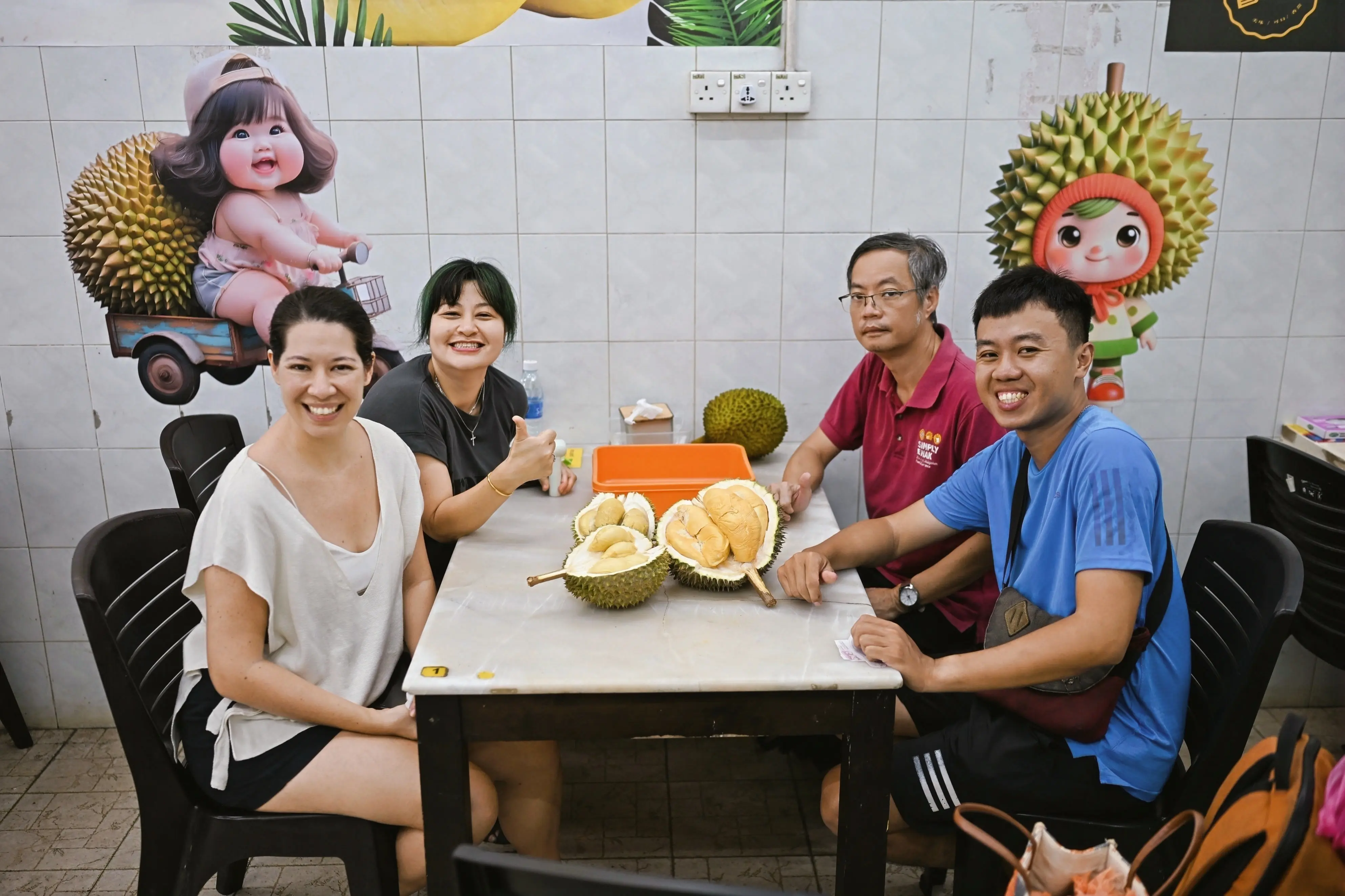
On Simply Enak tours, guides take guests to these vendors — not the packaged, frozen version at airports, but the freshly opened, tree-ripened experience that Malaysians fly across the country for.
Frequently Asked Questions
What if I cannot handle the smell? Start with D13 or D101 — both have milder aromas. Some first-timers find the texture more challenging than the smell; in that case, try durian-based desserts like durian cendol or durian puffs before committing to the fresh fruit.
How much should I expect to pay? Season prices range from RM15/kg for common varieties to RM85/kg for premium Musang King. Vendors price by the fruit, not by weight, for the premium varieties.
Can I try durian on a food tour? Yes. Tours that pass through wet markets and hawker centres will have the opportunity to stop at durian stalls. The best experience is on tours that include Pudu Market in KL or the Penang morning markets where vendors display multiple varieties.
Want to try it for yourself? Join a food tour in KL or Penang — our guides know which stalls have the best selection that week.
This durian guide is part of our colony series. Next: When Is Durian Season in Malaysia?.
Ready to taste these flavours yourself?
Join a Simply Enak food tour in Kuala Lumpur or Penang. Small groups, local guides, authentic experiences since 2011.
Pauline
Simply Enak Food Experiences
Pauline has been guiding food tours in Malaysia since 2011, sharing hidden gems and family-run stalls with travellers from around the world.
Enjoyed this story? Browse all stories →